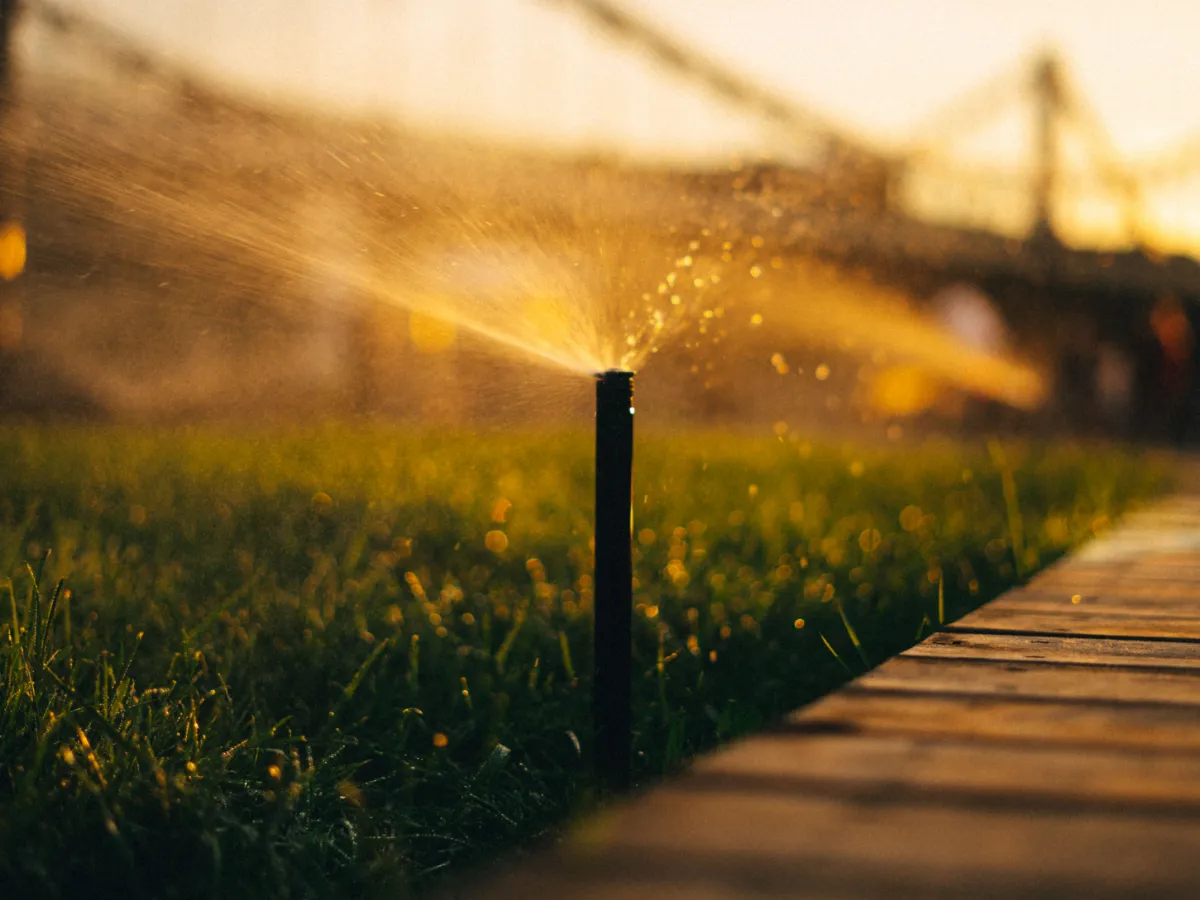
A broken head does not automatically mean you need a new sprinkler system. A changed backyard does not automatically mean replacing one head will solve the problem, either. Start by separating the visible symptom from the bigger question: does the existing layout still fit the property?
The sprinkler should water the yard. The sidewalk can fend for itself.
When to ask about a focused repair
A useful first description is specific: one head no longer rises, one area receives overspray, a zone behaves differently from the others, or a problem appeared after nearby work. Tell the person reviewing the system when it began and what changed. Avoid treating the visible symptom as a confirmed diagnosis.
For example, "the front-right head sprays onto the widened driveway" is more useful than "the sprinklers are bad." A photo of the head and a wider photo of the surrounding area help show the relationship between equipment and property.
EPA WaterSense recommends inspecting systems for broken or damaged heads, checking connections and directing water away from pavement. Those are useful observation categories, not proof of which part your particular system needs. [1]
When a broader review makes sense
Ask for the layout to be reviewed when your project changes what needs watering or what covers the ground. A planned patio, putting green, court or new bed is important context. Share the intended layout before deciding where equipment will remain.
Repeated problems in different locations also deserve a fuller description. Record which zones are affected and whether the pattern is consistent. Do not assume more operating time is the answer to an unidentified coverage issue.
Give the reviewer the whole picture
Before requesting a quote, gather your address, the affected area, symptoms, any known zone numbers and the controller make/model if easy to identify. Add photos of the problem and wider property views. Mention recent concrete, fence, planting or grading work and any larger project being planned.
If you already have a sketch, label it as approximate. You do not need to draw a construction plan to explain which part of the yard has become annoying.
Do not dismantle electrical equipment, alter backflow devices or dig for pipes just to complete an inquiry. Texas has a landscape-irrigation licensing program; the applicable licensed work should be handled through the appropriate professionals. [2]
What a useful scope should distinguish
Ask what is being repaired, what is being relocated, what existing equipment will stay and what condition still needs investigation. A clear proposal should separate the work identified now from possible additional work that cannot be established before inspection.
If irrigation is one part of a larger backyard project, ask who coordinates the sequence. The goal is a scope that fits the yard you are keeping or creating, not a collection of unrelated replacement parts.
Common questions
Does one broken sprinkler mean replacing the whole system?
Not by itself. It is a reason to investigate that problem. The right scope depends on the equipment, condition, layout and what else is changing on the property.
Should I use the routine price calculator for sprinkler work?
No. Irrigation is a project inquiry. Send the property and problem details through the full project form.
What can I send before a site visit?
Start with the address, a brief symptom description, photos and any known zones or controller details. Mention planned outdoor work so it can be considered in the scope.
Describe the change, not a guessed repair
| What you noticed | What to include |
|---|---|
| One head behaves differently | Location, timing and a close-up photo |
| Pavement receives water | Wider photo and any recent surface changes |
| Several zones have problems | Zone numbers and whether the pattern repeats |
| A patio or turf project is planned | Approximate layout and what existing planting stays |
Tell us what is changing on your property.
Send the address, photos and priorities for a scope-based project quote. Project work does not use the routine lawn and pet calculator.